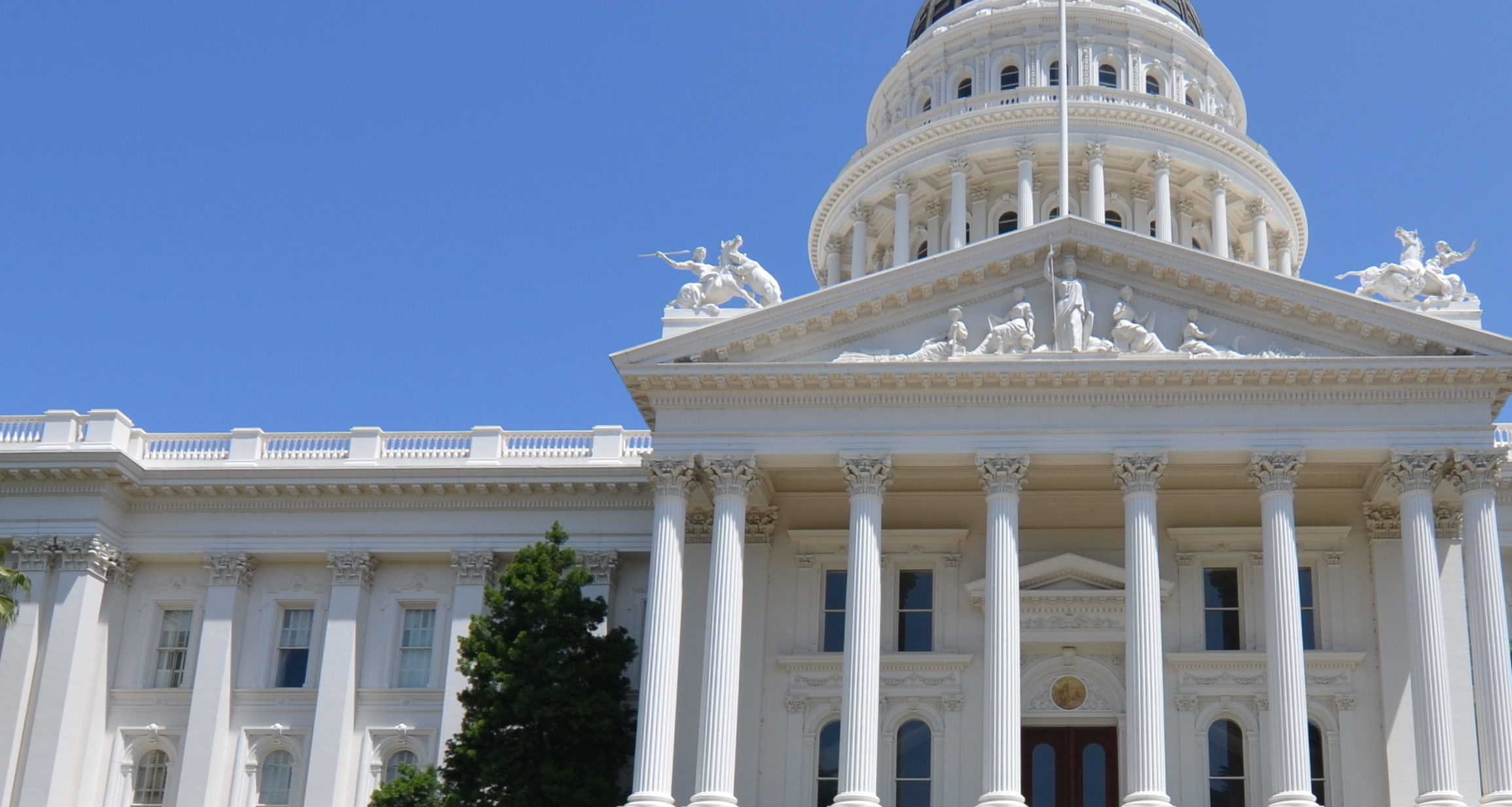
The California Legislature began its 2026 session on January 5 and is set to adjourn on August 31. On Thursday, January 8th, Governor Newsom delivered his final State of the State address, framing California as the nation’s functional alternative to Washington DC. Under the leadership of Senate President pro Tempore Monique Limón (D), Assembly Speaker Robert Rivas (D), and Governor Gavin Newsom (D), lawmakers will face continued budget deficits, rising housing and healthcare affordability challenges, and emerging issues in technology and AI regulation.
This sessions work will also take place under newly adopted limits on bill introductions in both chambers, which will influence how legislators prioritize their proposals throughout the session.
Key upcoming deadlines include:
- February 20: Deadline for bills to be introduced.
- June 15: Deadline for the Legislature to pass the Budget Bill.
- August 31: Last day for each house to pass bills.
- September 30: Deadline for the Governor to sign or veto bills passed before September 1.
HCA Healthcare is providing this legislative preview to keep colleagues updated on key developments that may affect care and access in the communities we serve. Below is an overview of key policy proposals that lawmakers will likely consider during the 2026 session.
Budget
Governor Newsom’s proposed 2026-27 budget and priorities were released on January 9, 2026. The budget proposal serves as a legislative starting point for fiscal debates. The proposal totals $348.9 billion budget, including a $248 billion General Fund, and allocates $23 billion in total reserves, $14.4 billion of which will be designated to the Rainy Day Fund, while addressing a projected deficit.
The Governor’s priorities highlight:
- Education: $27,418 per pupil for Transitional Kindergarten through 12 grade, including continued funding for universal transitional kindergarten and universal school meals.
- Higher Education: $5.3 billion for the University of California, $5.6B for the California State University, and $15.4 billion for California Community Colleges.
- Community Schools: $1 billion to expand the Community Schools Partnership Program.
- Medi-Cal: $222.4 billion in projected total Medi-Cal spending for 2026-27, including a $2.4 billion projected General Fund increase and $1.1 billion in Medi-Cal-related federal cost pressures and backfill.
- Wildfire & Forest Resilience: $314 million, including $58 million for fire prevention grants and $19.6 million for homeowner hardening and defensible space.
- Public Safety: $194.6 million in new investments.
- Homelessness and Housing Assistance: $500 million for Homeless Housing, Assistance and Prevention, tied to stronger accountability/performance requirements.
The Legislative Analyst’s Office (LAO) projects an almost $18 billion deficit for FY 2026-27, driven by higher program costs and constitutionally required spending, including Prop 98, the K-12 schools and community college minimum funding guarantee, and Prop 2, constitutional rules for minimum annual deposits into the Budget Stabilization Account (the Rainy Day Fund), which largely offset recent revenue gains.
The Newsom administration’s January budget projects a much smaller shortfall of about $3 billion. The administration also points to federal-related cost pressures, estimated at $1.4 billion, including $1.1 billion in Medi-Cal, as a key source of uncertainty heading into the May Revision.
The Governor’s May Revision is expected to incorporate updated revenue data and policy adjustments that could change the state’s fiscal outlook.
Rural Health Transformation Program
The Rural Health Transformation Program (RHTP), a new program created under OBBBA, will award $50 billion in grants to states between 2026 and 2030. The program is designed to support rural healthcare access, workforce capacity, technology modernization, and infrastructure investment. For FY 2026, CMS will distribute 50% of funds equally across approved states and allocate the remaining 50% based on need factors and a scored review of states’ applications.
The California Department of Health Care Access and Information (HCAI) submitted California’s RHTP application in November 2025, and CMS has announced awards for all 50 states under the program. California will receive more than $233.6 million for FY 2026.
The program arrives amid ongoing concerns about rural hospital financial stability and sustained access to care in rural communities. These initiatives are intended to build a more connected and sustainable network of care while supporting access closer to home for rural Californians.
Seismic Compliance
California hospitals face seismic compliance submissions in 2026 tied to the state’s 2030 hospital seismic requirements. HCAI required certain facilities submit seismic compliance plans by January 1, 2026, with additional documentation deadlines later in 2026 for buildings that intend to continue acute care services beyond 2030.
Facilities that cannot meet the 2030 requirements will be forced to close and cease patient services. The cost and complexity of upgrades, particularly for rural and safety-net hospitals, are expected to keep seismic compliance discussions on the Legislature’s radar regarding budget, infrastructure, and access issues.