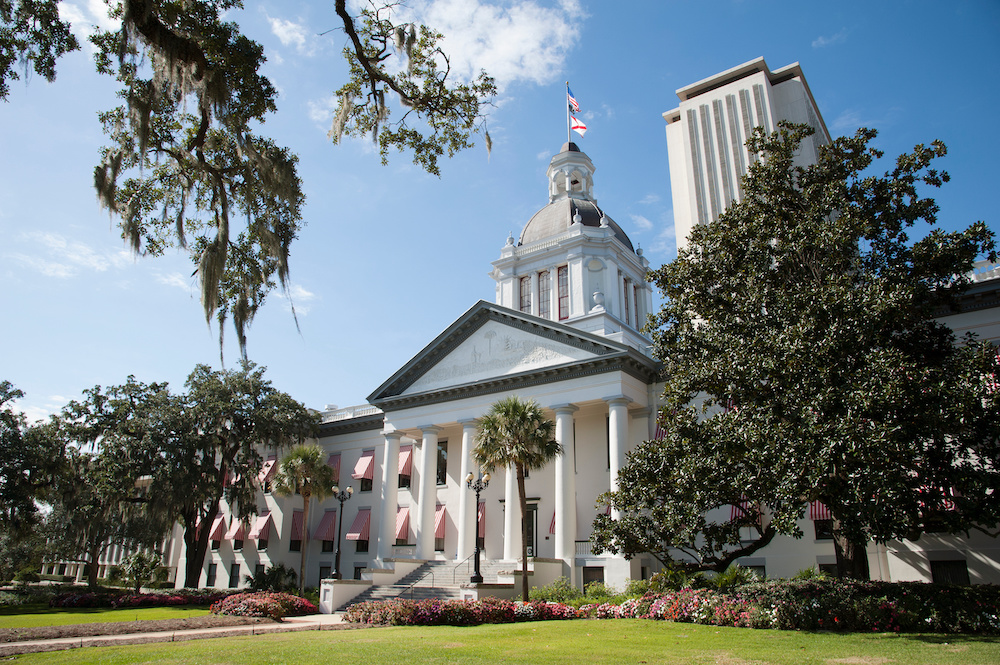
Since convening the 2026 General Session on January 13, the Florida Legislature has focused on a broad agenda that includes the state budget, affordability initiatives, and major health policy proposals. Despite more than 1,800 bills and proposed constitutional amendments filed, lawmakers have only advanced two measures to final passage.
In addition, Governor Ron DeSantis’ proposed special session on congressional redistricting has remained a factor for legislative bandwidth and planning, although a lawsuit filed in early February challenges his authority to call the special session, adding uncertainty to the timeline.
HCA Healthcare is providing this mid-session update to keep colleagues informed on key legislative developments that may affect care and access in the communities we serve.
Budget
Florida budget negotiations are underway, with the Senate and House proposing FY 2026-2027 spending plans.
The Senate’s proposed Health and Human Services budget includes a 3% cut to Medicaid hospital reimbursement rates, which would result in approximately $90 million in annual losses to Florida patients and hospitals.
Medicaid covers nearly 4 million Floridians and already reimburses hospitals below the cost of care, requiring providers to absorb losses to maintain patient access. Additional rate cuts would further strain hospital resources, limit investment in staff and services, and risk disrupting access to care.
If you haven’t yet, please Take Action by contacting your Florida state senator. Respectfully urge them to:
- Oppose the proposed 3% Medicaid hospital rate cut.
- Prioritize patients’ access to care by keeping hospital funding whole in final budget negotiations.
If you live in Tampa, please click Take Action here to contact Lt. Governor Jay Collins, who previously represented the district, which is currently vacant.
The “Big Beautiful Healthcare Frontier Act”
HB 693, the “Big Beautiful Healthcare Frontier Act,” a broad health and human services package, would repeal Florida’s Certificate of Need (CON) statutes and directs AHCA to report on market impacts from 2027-2031.
Key provisions include:
- Facility regulation: The bill would repeal the remaining CON programs for nursing homes, hospice services, and intermediate care facilities for individuals with developmental disabilities.
- Workforce capacity: The bill would enact the Physician Assistant Licensure Compact and EMS Licensure Interstate Compact, and update scope-of-practice/supervision provisions for certain clinicians.
- Coverage and public assistance alignment: The bill would implement federal requirements affecting Medicaid, CHIP (Florida KidCare), and SNAP.
- Commercial coverage operations: The bill would require certain health insurers, in specified circumstances, to apply payments for services provided by nonpreferred or out-of-network providers toward deductibles and out-of-pocket maximums.
The bill is currently in the House Health and Human Services Committee for consideration.
Medicaid
HB 1453 is a wide-ranging Medicaid and healthcare oversight bill centered on proposed work requirements for certain adults, along with additional program integrity and pharmacy cost-control changes.
Key provisions include:
- Medicaid work requirements: The bill would implement Medicaid work/community engagement requirements for certain able-bodied adults, contingent on federal approval and state implementation.
- Program integrity and audits: The bill would authorize AHCA to conduct retrospective reviews and audits of certain Medicaid claims and expand related program integrity and overpayment tools.
- Prescription drug cost controls: The bill would revise Medicaid prescribed-drug spending control components, including preferred and high-cost drug list structures.
- Integrated managed care pilot: The bill would require implementation of an Integrated Managed Care Pilot Program in designated regions by a specified date, which may affect plan operations and provider participation requirements in selected areas.
The bill is currently in the House Health Care Facilities and Systems Subcommittee for consideration.
Healthcare Claims
SB 1082 would update Florida’s statewide provider and health plan claim dispute resolution program to prevent duplicative review when a disputed out-of-network claim has been submitted to the federal Independent Dispute Resolution (IDR) process under the No Surprises Act (NSA). Florida currently only uses the NSA’s federal IDR process for smaller claims, and larger disputes are handled through the state’s framework. The bill is intended to reduce overlap when disputes are submitted into federal IDR.
The bill unanimously cleared both the Health Policy (10-0) and Banking and Insurance (10-0) Committees and is now in the Senate Rules Committee awaiting consideration.
Rural Healthcare
Rural health remains a major focus of the 2026 session, with lawmakers advancing packages aimed at improving access to care, stabilizing rural provider networks, and supporting the workforce needed to serve rural communities.
SB 250, “Rural Renaissance” legislation, frames rural modernization as part of a broader strategy that links health access with infrastructure and community development, including programs intended to strengthen rural capacity and improve access to services.
The bill unanimously passed the Senate (39-0) on January 14 and moved to the House for consideration.