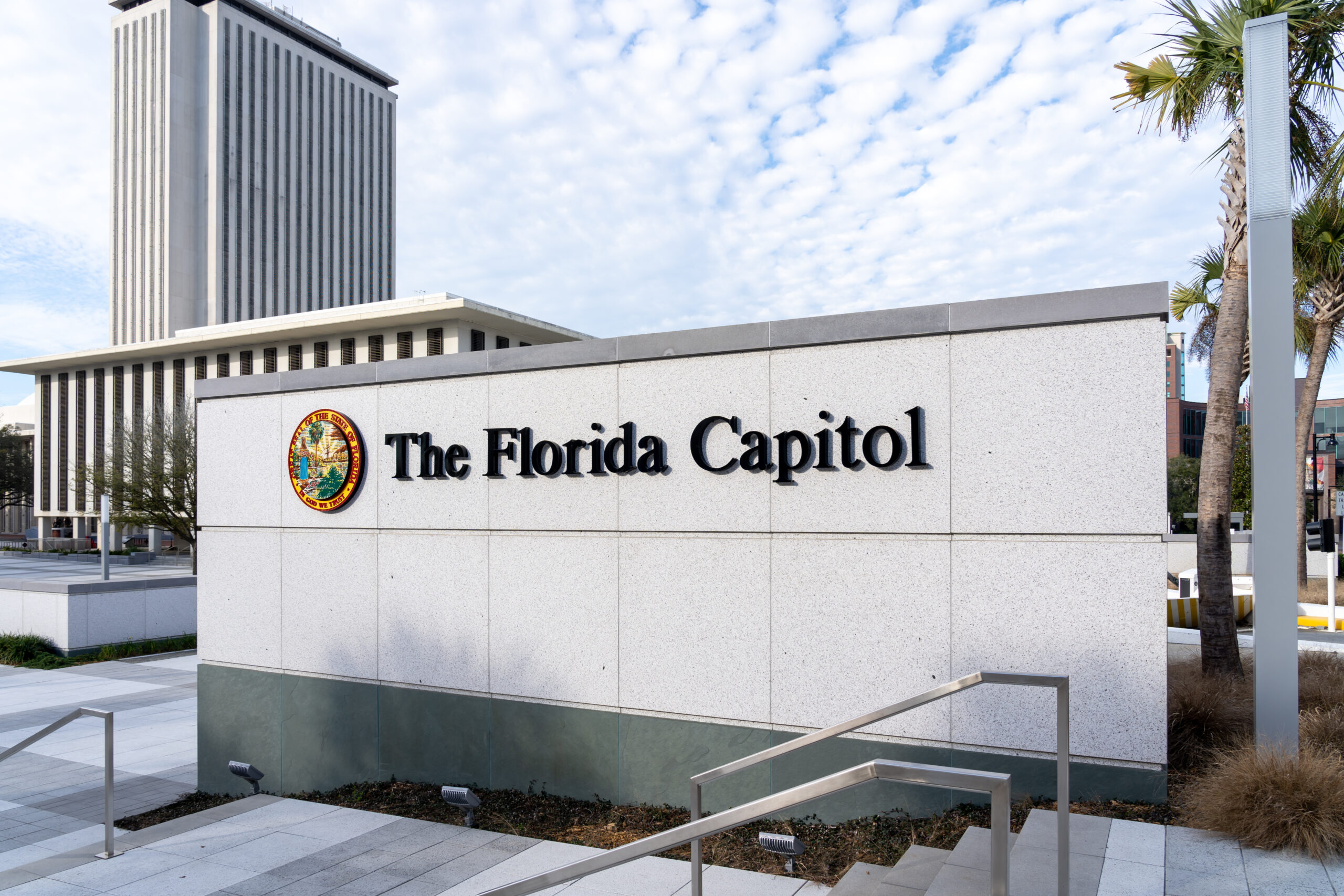
The Florida Legislature will convene its 2026 legislative session January 13 and is scheduled to adjourn March 13. Under the leadership of Senate President Albritton (R) and House Speaker Perez (R), in coordination with Governor Ron DeSantis (R), lawmakers are expected to take up a broad agenda that includes: the state budget, tax relief proposals, insurance regulation, and health policy issues shaped by recent federal Medicaid changes.
The session will unfold during a high-profile election year that includes the governor’s race and multiple statewide offices on the ballot.
HCA Healthcare is providing this legislative preview to keep colleagues informed of key developments that may affect care delivery and access in the communities we serve. This is an overview of key policy proposals that lawmakers will likely consider during the 2026 session.
Budget
Governor Ron DeSantis has proposed a $117.4 billion FY 2026-27 spending plan, the “Floridians First” budget. The proposal includes $16.75 billion in reserves and $250 million dedicated to debt reduction. This reflects a continuing effort to pair new investments with fiscal buffers.
Key highlights of the proposed budget include:
- $1.56 billion for salary increases for teachers and other instructional personnel.
- $1.71 billion for early childhood education, including $483.4 million for Voluntary Prekindergarten.
- $300 million for the Safe Schools Allocation.
- $20 million for classroom security upgrades and additional campus security, following the April FSU mass shooting tragedy.
- $13.5 million for state law enforcement pay raises.
- $1.6 billion for Everglades restoration, water quality, and conservation initiatives.
- $91.7 million for Florida National Guard facilities and guardsmen benefits.
- $300 million to support fiscally constrained counties impacted by the reduction or elimination of property taxes.
Medicaid and Healthcare Affordability
Florida House leadership has unveiled a sweeping healthcare package, “Florida’s New Frontier in Healthcare,” which seeks to align state policy with recent federal reforms enacted under the One Big Beautiful Bill Act (OBBBA). The package focuses on: healthcare, workforce expansion, Medicaid, CHIP (Florida KidCare), and SNAP eligibility and oversight changes, prescription drug pricing controls, and increased regulation of pharmacy benefit managers.
The package is comprised of two parts:
- HB 693, The Big Beautiful Healthcare Frontier Act.
- HB 697, The Prescription Reduction Incentives and Competition Enhancement Act (PRICE Act).
“Rural Renaissance”
Senate President Albritton has made his “Rural Renaissance”package, which died during the 2025 session, a priority. Re-filed as SB 250, Albritton has indicated he plans to move the legislation quickly during the opening weeks of session. The rural package reflects broader concerns about access to care in underserved areas. It is positioned as part of a larger strategy addressing workforce shortages, economic development, and essential services outside of urban centers.
Senate leadership has framed the package as a long-term strategy to modernize rural systems while preserving local character. Several provisions in the package are designed to align with Florida’s pursuit of federal rural healthcare funding under OBBBA.
Key focus areas of the package include:
- Rural healthcare access and workforce, including support for rural hospitals, provider recruitment, mobile and telehealth services, and enhanced emergency response capacity.
- Education and workforce development, including expanded regional education consortia and incentives to attract educators to rural areas.
- Transportation, broadband, and infrastructure, with investments in farm-to-market roads, small-county transportation programs, and improved broadband coordination.
- Housing and community stability, including increased support for affordable housing and assistance for communities experiencing population decline.
- Local capacity and economic development, including the creation of an Office of Rural Prosperity to support planning, grants, and technical assistance for rural governments.
Rural Health Transformation Program
The Rural Health Transformation Program (RHTP), a new program created under OBBBA, will award $50 billion in state grants between 2026 and 2030. The program is designed to support rural healthcare access, workforce capacity, technology modernization, and infrastructure investment.
CMS has announced awards for all 50 states under the program. Florida will receive more than $209 million for FY 2026.
Florida’s proposed RHTP initiatives focus on strengthening rural health systems through several key efforts:
- Rural Care Delivery Transformation: Expanding access through rural and satellite clinics, mobile health services, community paramedicine, and hub-and-spoke models.
- Behavioral Health and Specialty Access: Increasing access to behavioral health, telepsychiatry, telestroke, tele-ICU, and specialty consult services in rural communities.
- Maternal, Chronic, and Emergency Care:Improving outcomes for maternal health, chronic disease management, and emergency response through targeted, population-specific initiatives.
- Health Technology and Infrastructure: Investing in telehealth, remote patient monitoring, diagnostic technology, interoperability, and onboarding Florida Health Information Exchange (Florida HIE) services to improve care coordination.
- Workforce Development and Sustainability: Supporting recruitment, training, and retention of rural healthcare professionals and advancing value-based purchasing and operational sustainability models.
Property Taxes, Housing, and Insurance
Affordability discussions extend beyond healthcare to housing, property taxes, and insurance. While Republicans continue to explore long-term property tax relief for homesteaded properties, Democrats have focused more heavily on property insurance costs and housing affordability initiatives.
House leadership has advanced a “menu” of proposed constitutional amendments focused on homesteaded property tax relief. This approach would send options to voters on the 2026 ballot.
- HJR 201 aims to exempt homestead property from non-school property taxes, leaving school district levies in place.
- HJR 203 aims to phase in increases to the non-school homestead exemption as a multi-year phaseout.
- HJR 209 aims to increase the homestead exemption by $200,000 for homeowners with “comprehensive” homeowners insurance.
Redistricting
Governor DeSantis called for a special legislative session from April 20 to 24 on mid-decade congressional redistricting. House Speaker Daniel Perez has signaled he would prefer the House consider new congressional maps during the regular session, but the governor argues lawmakers should delay map-drawing due to expected U.S. Supreme Court guidance that could affect how redistricting is handled.