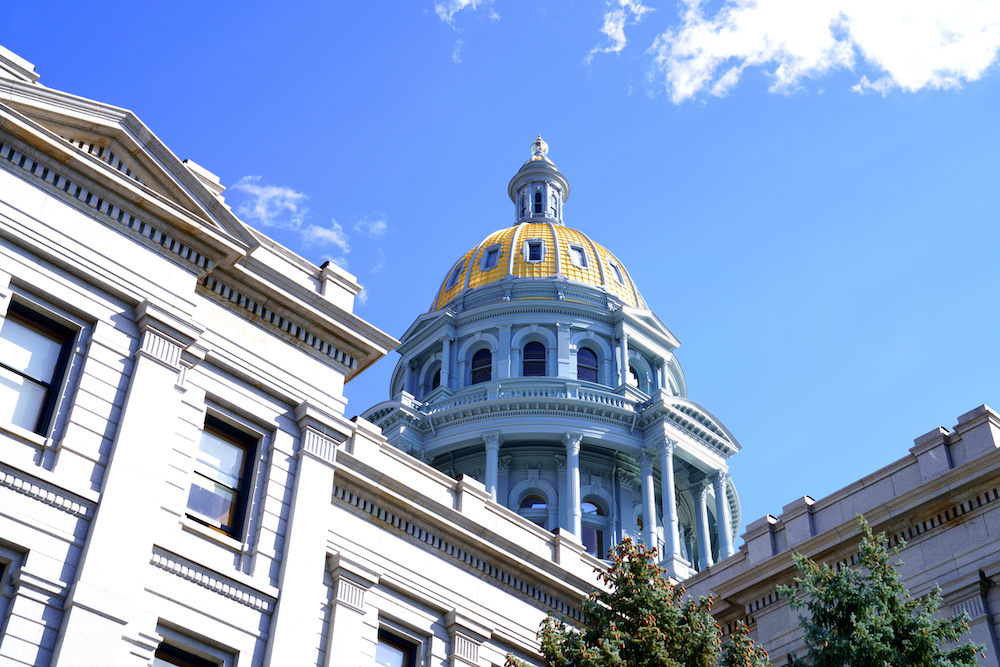
Today, January 14, Colorado lawmakers return to Denver for the legislative session. The session is scheduled to adjourn May 13. Under the leadership of Senate President James Coleman (D) and Speaker of the House Julie McCluskie (D), in conjunction with Governor Jared Polis (D), this session will address a range of issues, including stabilizing the state budget, healthcare, education, universal preschool, public safety, and artificial intelligence (AI).
HCA Healthcare is providing this legislative preview to keep colleagues updated on key developments that may affect care and access in the communities we serve. Below is an overview of key policy proposals that lawmakers will likely consider during the 2026 session.
Budget
Colorado is facing an approximately $800 million budget deficit for the fiscal year beginning on July 1, 2026. Governor Jared Polis has proposed a $50.7 billion FY 2026-27 budget. The proposed budget includes $18.6 billion for the general fund and an overall spending increase of $2.7 billion (5.6%) over the FY 2025-26 budget.
Key highlights of the proposed budget include:
- $276 million for K-12 total program funding.
- $14.3 million to support Universal Preschool.
- $298 million in General Fund for Medicaid services (and over $2 billion more in Total Funds).
- $81.9 million increase for higher education operations.
- $149.8 million General Fund for capital construction, including $109.3 million for controlled maintenance.
- $5 million for Colorado Department of Public Health and Environment (CDPHE) lab facilities tied to drinking water enforcement capacity.
- $400 million in Pinnacol Assurance conversion proceeds (the state’s workers’ compensation insurer of last resort), including $193 million for senior homestead property tax relief and $109 million for controlled maintenance.
- $7.1 million for the State’s emergency preparedness, response, and recovery efforts.
Medicaid & Coverage
Colorado’s Medicaid program, Health First Colorado, covers about 1.2 million residents and is one of the largest drivers of state spending. Governor Polis’s budget proposal seeks to slow year-over-year General Fund growth for Medicaid to 5.6%. The budget letter notes General Fund Medicaid expenditures grew an average of 8.8% per year over the past decade, outpacing revenue growth and the TABOR limit. The vast majority of growth in Medicaid has been in programs other than hospital reimbursement.
The hospital share of Medicaid spending in Colorado is low relative to most other states. Nationally, hospitals account for 32% of Medicaid spending. In Colorado, hospitals only account for 18% of the Medicaid budget. This distinction is important for us to remember as policymakers talk about recent growth in Medicaid liabilities.
The governor’s budget package relies on a number of Medicaid cuts, including:
- Reducing Medicaid provider rates to 85% of the Medicare benchmark.
- Changes to acute care services, including expanding coverage for 3D mammography.
- Cost controls for Medicaid benefits with disproportionate growth, including prior authorization for definitive drug testing panels after 16 tests per member per year.
- Adjusting payment methodologies for home health nursing and therapy services to better match the length of service provided.
- Stopping automatic enrollments from Children’s Extensive Support (CES) and the Children’s Habilitation Residential Program Waiver (CHRP) into the Developmental Disabilities Waiver (DD) and limiting “churn” enrollment when current members leave the program.
- Potential future review of provider fees, including Colorado Healthcare Affordability and Sustainability Enterprise (CHASE), if federal state-directed payments (SDPs) are approved.
Medicaid reductions could have downstream impacts on hospital finances and access to care. As lawmakers debate cost controls, Representative Lisa Feret (D-District 24) is floating an early-stage proposal that would require employers with at least 1,000 employees in Colorado to contribute toward the Medicaid and SNAP costs associated with their part-time workers who are enrolled in the programs. Representative Feret’s proposal is estimated to raise about $100 million.
On January 2, Governor Polis proposed an additional $124 million in cuts, many in Medicaid. It includes a $64 million cut to Graduate Medical Education (GME), impacting physician education across Colorado. This could have serious consequences for Colorado, where many areas already suffer from a physician shortage. While this cuts $64 million in GME programming, the state general fund would only realize approximately $18 million in savings.
Rural Health Transformation Program
The Rural Health Transformation Program (RHTP), created under the One Big Beautiful Bill Act (OBBBA), will award $50 billion in state grants between 2026 and 2030. The program is designed to support rural healthcare access, workforce capacity, technology modernization, and infrastructure investment.
Colorado was awarded $200 million for the first period of the grant, running through September 2027.
The state’s proposed RHTP initiatives focus on strengthening rural health systems through several key efforts:
- Prevention and Chronic Disease: Promote evidence-based, measurable interventions to improve prevention and chronic disease management.
- Consumer Tech Solutions: Improve efficiency, enhance cybersecurity capability development, and improve patient health outcomes.
- Fostering Collaboration: Build and strengthen local and regional partnerships between rural facilities and other providers to improve quality, stabilize finances, and expand access to care.
- Workforce Development: Recruit and retain clinical workforce talent to rural areas, including service commitments to rural communities for at least five years.
- Appropriate Care Availability: Assist rural communities to right size their healthcare delivery systems by identifying needed preventative, ambulatory, pre-hospital, emergency, acute inpatient care, outpatient care, and post-acute care service lines.
- Innovative Models of Care: Developing projects that support innovative models of care that include value-based care arrangements and alternative payment models, as appropriate.
Many rural hospital CEOs have voiced concerns with the state’s plan to spend money, with some worried that a proposed service centralization may actually reduce care in rural areas.
Education & Workforce Pipeline
Governor Polis’s budget proposal continues the seven-year rollout of the new K-12 funding formula and maintains the shift to a three-year enrollment average for 2026-27. The average per-student funding would rise to $12,272, an increase of $413 from the current year.
The administration is also signaling an updated Universal Preschool request early in session after the program’s roughly $344 million cost this year.
For higher education, the governor’s plan would allow public colleges and universities to increase in-state tuition by 2.6% and out-of-state tuition by 3%, which state estimates say would generate roughly $81.9 million in additional operating revenue. The budget also proposes $14.2 million to support salary increases at colleges and universities.
Public Safety & Environmental
Colorado’s public safety and emergency management budget is unfolding against uncertainty about federal support. More than $36 million in FEMA emergency preparedness funding for Colorado has been on hold, tied to a federal shutdown and disputes over grant conditions.
Against that backdrop, the governor’s FY 2026-27 proposal includes $7.1 million to support the state’s emergency preparedness, response, and recovery capacity in case federal public safety funds continue to be withheld. The proposal also begins implementing Proposition 130 fund transfers intended to support local law enforcement, with the first $15 million transfer scheduled for July 1, 2026.
The budget proposes $5 million for state laboratory facilities to regain EPA certification tied to drinking water testing and to improve the state’s ability to identify environmental health threats. That request comes after serious problems at the state public health lab, including data manipulation and quality-control failures, contributed to the loss of EPA certifications.
Transportation
Lawmakers are expected to focus on funding and timing for local transit projects and Colorado Department of Transportation (CDOT) enterprise programs. The Joint Budget Committee Staff project revenue increases of $52.1 million for local transit and rail grant programs, $17.8 million for the Bridge and Tunnel Enterprise, and $5.8 million for the Multimodal Transportation and Mitigation Options Fund (MMOF).
CDOT is requesting $55.6 million in MMOF spending authority for FY 2026-27 to continue previously awarded local transit projects after earlier appropriations lapsed at the end of FY 2025.